
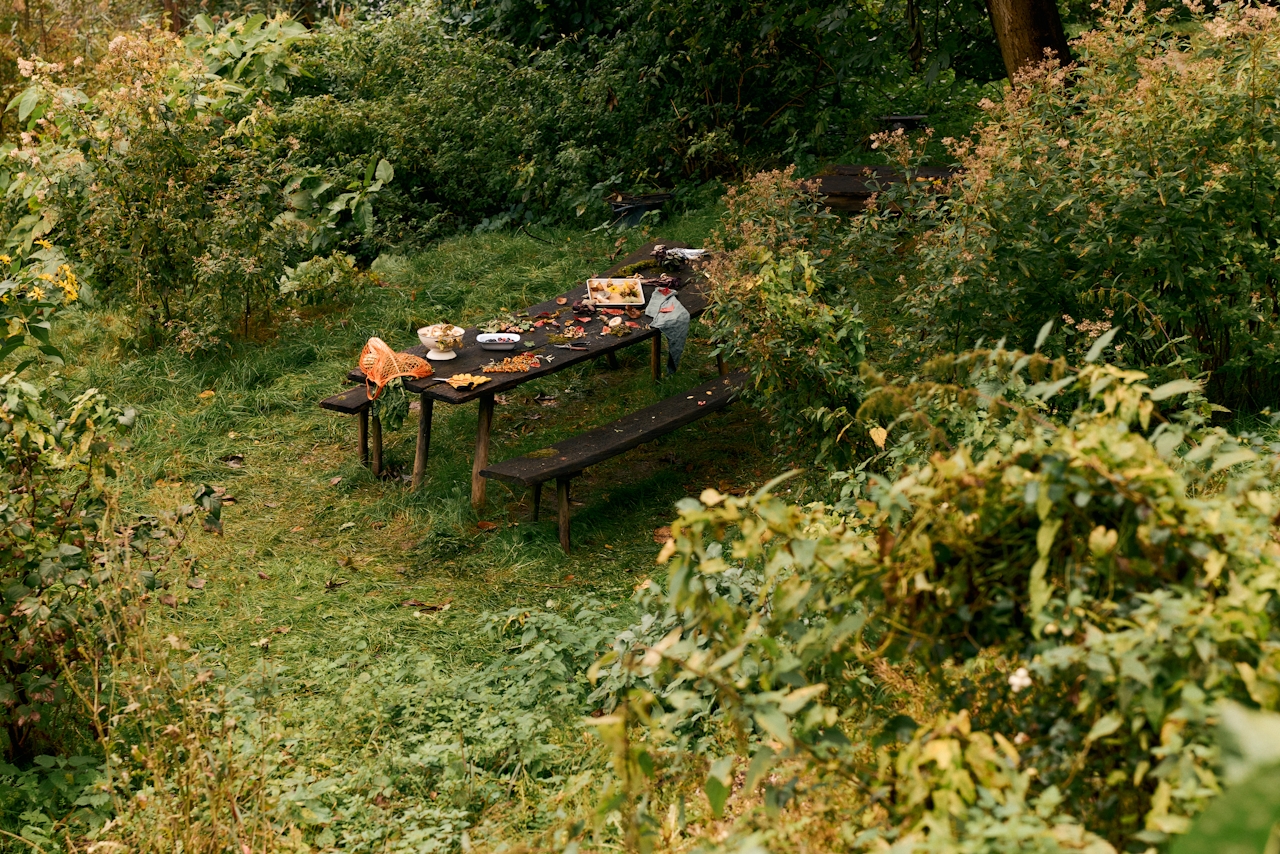
The answer is simple:everything.
In 1989, Italian journalist Carlo Petrini founded the Slow Food movement as a direct response to the opening of a McDonald’s near the Spanish Steps in Rome. What began as a cultural protest against the rise of fast food evolved into a global philosophy that now connects more than 100,000 people across over 160 countries.
But Slow Food is not just about preserving tradition. It is, in many ways, a redefinition of modern luxury—one that is no longer measured by speed or excess, but by origin, intention, and care.

What exactly is Slow Food?
At its core, the movement is guided by three principles: food should be good, clean, and fair. Good in taste and quality, clean in its environmental impact, and fair to those who grow and produce it.
This approach challenges the industrial food system by prioritizing quality over mass production and connection over convenience. Slow Food advocates for seasonal and local ingredients, the preservation of native seeds and traditional culinary practices, and the support of small-scale producers over large industrial chains.
Ultimately, it seeks to restore something we’ve lost: a direct relationship with what we eat.
Its connection to sustainability
In April, as we celebrate Earth Month, the message of Slow Food feels especially urgent. Industrial agriculture is responsible for nearly 30% of global greenhouse gas emissions, while also contributing to soil degradation, excessive water use, and the loss of biodiversity.
In contrast, the Slow Food model promotes diversity over monoculture, living soils over chemical dependency, and shorter supply chains that significantly reduce carbon footprints.


Eating local is no longer just a culinary choice—it becomes an environmental statement. It supports rural economies, protects unique ingredients, and helps preserve ecosystems that have been threatened by industrial production.
The movement also encourages a more mindful approach to food waste, inviting us to value ingredients more deeply and use them with intention.
A revolution that begins at the table
Adopting the Slow Food philosophy doesn’t require a radical lifestyle shift. It’s not about perfection, but intention. It can begin with simple choices: visiting local markets, choosing seasonal produce, cooking more often at home, or simply taking the time to eat without distraction.
In a world that glorifies speed and convenience, choosing to slow down becomes an act of quiet resistance.
Because every food choice is also a cultural, political, and environmental decision. It’s a way of voting—every single day—for the kind of world we want to live in.
The New Luxury: Knowing Where Your Food Comes From
For years, luxury at the table was defined by exotic, imported, or hard-to-find ingredients. Today, that narrative is shifting.
True value is no longer found in what is far away, but in what is authentic.
Knowing where an ingredient comes from, who cultivated it, under what practices, and in which season, has become a new symbol of sophistication. Traceability—that detailed understanding of a food’s origin—is redefining how we perceive quality.
More than ever, chefs, restaurants, and consumers are turning toward local producers, building shorter, more transparent, and more human supply chains. It’s not only about reducing environmental impact, but about restoring a sense of connection with what we consume.
In this context, eating becomes a more conscious experience—and at the same time, a more sensory one. Flavors feel more honest, processes more intentional, and the story behind each dish carries a deeper meaning.
Because ultimately, the new luxury is not about having access to everything, but about knowing how to choose better.


The Wealthy Note:
At The Wealth, we believe that luxury is evolving. It’s no longer defined solely by access, but by awareness. Eating well today is not just about high-quality ingredients, but about understanding their origin, their impact, and the story behind them.
The new luxury is knowing where what you consume comes from, choosing with intention, and finding beauty in the essential. Because a well-set table is not only about aesthetics—it is a reflection of values.
And this April, more than ever, it’s worth choosing thoughtfully.
Discover more about the ritual at: https://thewealthdigital.com/en/the-ritual/


Leave a Reply